CELESTIAL WEATHER
Water Clouds Observed Thickening and Thinning on Frigid World 7.5 Light-Years Distant
Astronomers using the James Webb Space Telescope report the first direct confirmation of variable water clouds beyond our solar system, on the coldest known brown dwarf.
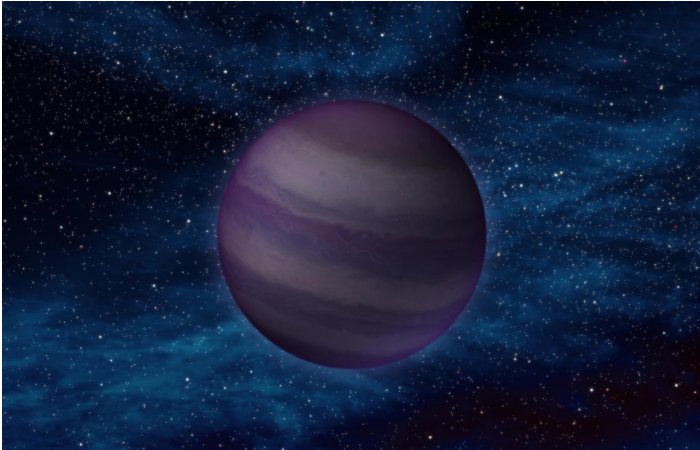
TUCSON, ARIZ. — A team led by Brittany Miles, an assistant astronomer at the University of Arizona's Steward Observatory, has reported that water clouds on a distant object change in thickness over time, much as weather does on Earth, according to a report published by MessageToEagle.com.
The object, WISE 0855, is described as the coldest known brown dwarf and lies about 7.5 light-years away. Using the James Webb Space Telescope, the team watched it for 11 hours, collecting a spectrum of its light every 15 minutes. The study appears in The Astrophysical Journal.
At roughly 265 Kelvin, colder than Earth's surface, the body has about twice the mass of Jupiter and nearly the same size. The report says it behaves in many ways like a free-floating giant planet. Brown dwarfs are described as too massive to be planets and too small to ignite as stars.
According to the study, two processes operate at once: high-altitude water clouds that thicken and thin as the object rotates, and deep gases, including carbon monoxide and phosphine, carried upward by heat from within. Co-author Mark Marley, head of the Lunar and Planetary Laboratory at the university, likened observing it to looking through a screen door, in which the screen itself must also be understood.
"Even though brown dwarfs are not true planets, they exhibit planet-like behavior," Miles said. She suggests the same basic physics may apply to gas giant exoplanets now under study, and hopes to log further Webb observations to refine the picture of the object's rotation and atmosphere.