ANCIENT ENIGMAS
Lost Inca Roads Found Beneath Jungle Canopy Near Machu Picchu
A Polish-Peruvian team says laser scanning from drones has revealed more than 2.5 kilometers of forgotten pre-Columbian road on Mount Yanantin.
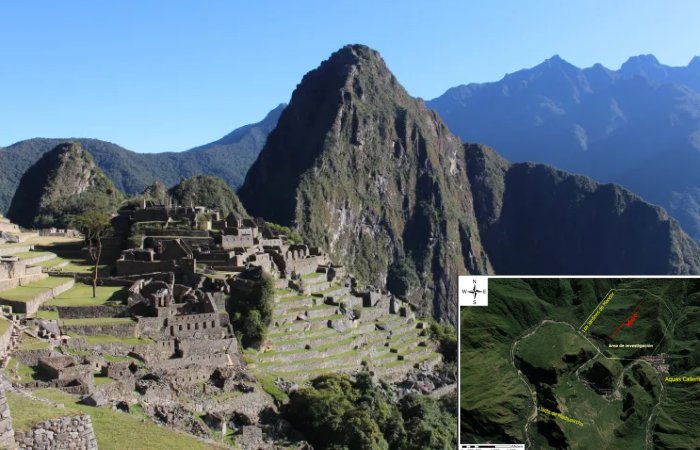
MACHU PICCHU, PERU — A team of Polish and Peruvian archaeologists has located more than 2.5 kilometers of previously unknown roads in the forest near Machu Picchu, according to a report published by Ancient Pages. The team also mapped forgotten terraces, platforms and circular structures.
The fieldwork took place in July and August on the steep slopes of Mount Yanantin, at altitudes of between 2,000 and 2,700 meters. The report says the dense, humid jungle had made the remains virtually invisible from the ground.
To see through the foliage, the researchers flew drone-mounted LiDAR, a laser-pulse system that filters out vegetation and builds detailed three-dimensional models of the terrain. One clearly defined stretch of road is said to run at least 1.2 kilometers. On the ground, Dr. Bartlomiej Cmielewski noted that hacking through just 250 meters of forest took three hours.
Professor Mariusz Ziólkowski says the find may alter the accepted picture. Road networks within Machu Picchu National Park link more than 60 archaeological sites, mostly on the left bank of the Urubamba River, and it had appeared that Inca planning was concentrated there. The new roads, on the opposite bank, suggest that side also underwent significant cultural change in Inca times. The area, he remarked, had not attracted much attention, "fortunately for us, one might say."
Some caution is attached. The exact age of the paths remains unconfirmed, and they may include pre-Inca elements. Professor Ziólkowski says only the first stage of the LiDAR analysis is complete and believes there are at least twice as many roads to be found.
Working with Peruvian authorities under the supervision of Dr. Nino del Solar Velarde, the team is keeping the coordinates confidential to deter looting. Dr. Cmielewski says they intend to seek permits for wider LiDAR surveys and targeted excavations.