ANCIENT ENIGMAS
Ice Age Carvers Copied the Tusk's Own Grain, Study of Ukrainian Venus Figurines Finds
An international team reports that ornaments on 18,000-year-old mammoth-ivory figurines from Mizyn echo the natural growth lines of the tusk itself.
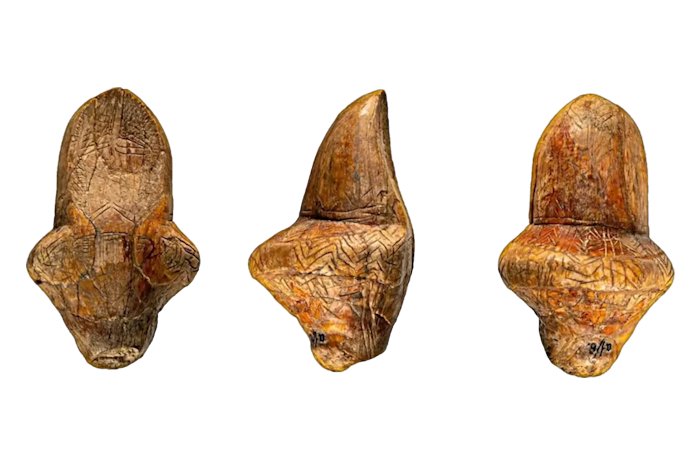
MIZYN, UKRAINE — An international research team says it has identified the source of the ornamentation on eighteen female figurines carved from mammoth ivory some 18,000 years ago, according to a report by Ancient Pages on a study in the journal npj Heritage Science.
The figurines were excavated at the Mizyn campsite in Northern Ukraine more than a century ago. The researchers examined them under the microscope, and six were digitised in three dimensions under a heritage project backed by the US Ambassador Fund for Cultural Preservation. Access to such objects had been restricted, the report says, owing to Russian military actions targeting historical artifacts in Ukraine.
The central finding concerns Schreger and Owen lines, the natural growth patterns of a mammoth tusk. According to the study, the ancient carvers observed these lines and reproduced them as ornament, and the lines also guided the composition of the figures. The report notes the idea was first proposed in the 1960s, and that digital tools have now supplied detailed evidence. In places, the carved decoration is said to follow the natural lines offset by less than a millimetre.
The team also reports evidence of careful planning, with a two-dimensional design fitted to a three-dimensional form. Oleksandr Naumenko is quoted as saying the ornaments were likely important in the social lives of their makers, rather than merely decorative.
A note of caution comes from a researcher identified as Kiosak, who observes that radiocarbon dates for the Eastern European Paleolithic carry very large uncertainties, of millennial scale. The study also describes a gap of roughly 3,000 to 5,000 years in the record of such figurines, after which they reappear, earliest at Mizyn in the east and in Magdalenian contexts in the west.