ANCIENT ENIGMAS
Clay Shrine Maiden Stands Guard Again After 1,500 Years Beneath Gunma Mound
Archaeologists report a well-preserved haniwa figurine of a female shaman, still bearing traces of red paint, from a Kofun-era tomb beside the Tone River.
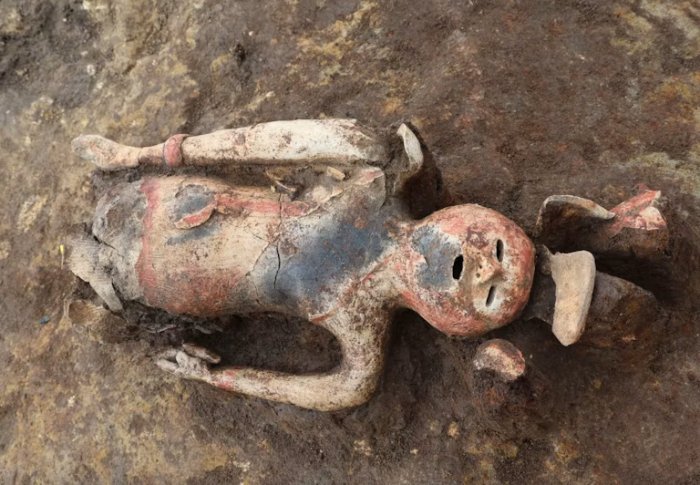
ISESAKI, JAPAN — Archaeologists in Gunma Prefecture have unearthed a clay figurine of a female shaman, or miko, from a burial mound that, according to Ancient Pages, was raised some 1,500 years ago. The piece was excavated from Tomb No. 1 at the Nishikaminomiya site, near the Tone River in Isesaki City, and is dated by experts to the second half of the fifth century.
The figure is a haniwa, one of the terracotta cylinders and statues that the report says were set on and around graves of the Kofun Period. It stands about 41 centimeters tall and consists of a head and upper torso, both intact. In her left hand she holds what the article describes as a scepter-like ritual tool, and she wears clay bracelets on both wrists and a sash over one shoulder.
Her hair is dressed in an elaborate topknot called the Kofun Shimada, modeled in thick clay cords to reflect the fashions of high-status women of the day. Faint traces of red paint remain on her face and torso. The article notes that such pigment was historically associated with ritual purification and the warding off of evil spirits.
Archaeologists, the article states, believe haniwa served a dual purpose: a spiritual barrier guarding the grave against malevolent forces, and a standing funerary pageant displaying the deceased ruler's wealth and authority. The figures were not placed inside the tomb but lined up on the mounds or along the surrounding moats.
The report holds that an intact haniwa with such explicit ritual markers is highly unusual, and suggests that the person buried in Tomb No. 1 held high status tied to shamanistic protection. The figurine now sits in the Excavation Information Museum at the Gunma Prefectural Archaeological Research Center in Shibukawa, where it is on public display. Researchers hope continuing excavations will shed further light on the region's power and ceremony.