ANCIENT ENIGMAS
Stone Clock of Puebla Said to Pre-Date Maya Rivals by Centuries
Archaeologists with Mexico's INAH report that a vast complex at Teteles de Ávila Castillo served as a solar observatory some 2,500 years ago.
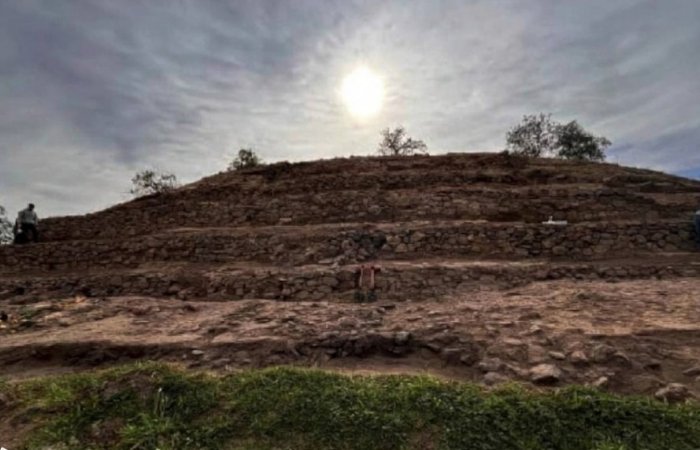
SIERRA NORTE, PUEBLA, MEXICO — Archaeologists from Mexico's National Institute of Anthropology and History (INAH) have confirmed, according to a report from Ancient Pages, that a large architectural complex in the Sierra Norte of Puebla functioned as a solar observatory more than 2,500 years ago. The settlement, known anciently as Tetelihtic, is said to have been laid out according to the movements of the heavens.
At the heart of the find is an arrangement called Group E, east of the Great Plaza. It comprises a quadrangular courtyard flanked by two stone bases. The eastern base measures 90 meters from south to north and 40 meters from east to west; the western measures 46 by 27 meters. The report says the plan matches the Maya Group E at Uaxactún, Guatemala, though it is twice the size. Dated to the Middle Preclassic (1000–600 BC), it is described as Mexico's oldest recorded solar observatory.
One feature sets it apart. Where Maya examples align the center of the long base with the equinoxes, the report states, the Teteles complex instead fixed the start of the calendar cycle in February and the opening of the harvest season in October. An observer standing at the front at dawn could reportedly follow the sun's path through equinoxes and solstices.
Alberto Diez Barroso Repizo, director of the project, is said to see in the site support for a Mayan ethnolinguistic link among regional Huastec groups, implying Maya influence in Puebla a thousand years before the Common Era. The main structure also aligns with the star Canopus, which scholars connect with the Nahua goddess Nantehuitz. The project's hypothesis holds that Tepeyac may be the cradle of Totonac culture.
The timeline offered runs thus: the city thrived between 900 BC and 100 AD, was partly abandoned as Cantona, Cholula and Teotihuacan rose, and received offerings on its edges until a final Totonac offering dated 600 to 900 AD. Researchers, the report says, believe the inhabitants were ancestors of the Totonac of Yohualichan and El Tajín.